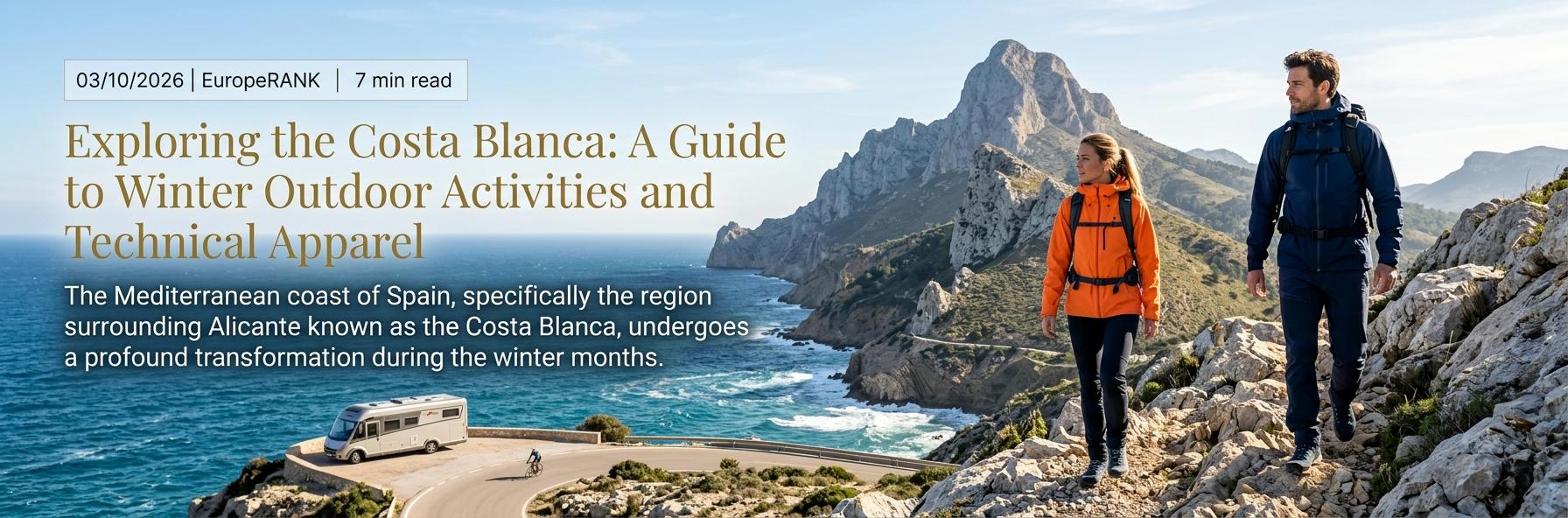
The Mediterranean coast of Spain, specifically the region surrounding Alicante known as the Costa Blanca, undergoes a profound transformation during the winter months. While many associate this coastline with the high temperatures of summer, it serves as an exceptional destination for outdoor enthusiasts seeking a temperate climate conducive to hiking, cycling, and mountaineering. The unique geography—spanning from coastal plains to rugged limestone peaks—offers a diverse palette of experiences, provided one understands the nuances of the local microclimates and prepares with the appropriate technical equipment.
Navigating the Microclimates: Coast vs. Mountains
One of the defining characteristics of the Costa Blanca in winter is its climatic variability. On the coast, the Mediterranean Sea acts as a thermal regulator; during the day, temperatures remain remarkably mild, often hovering between 15°C and 20°C (59°F–68°F). This makes it an ideal environment for long-distance road cycling or coastal trekking. However, this maritime warmth does not extend uniformly to the inland highlands.
As one ascends into the mountains—such as those surrounding the Puig Campana or the Sierra de Bernia—the temperature drops significantly. While days may remain sunny and pleasant, evenings can bring a sharp chill. Furthermore, wind becomes a critical factor on high ridges and exposed peaks. The "Tramontana" winds can sweep across the limestone faces, stripping away body heat rapidly. Therefore, an outdoor itinerary in this region requires a strategic approach to clothing that accounts for these rapid fluctuations between sun-drenched valleys and wind-exposed summits.
Terrain and Activity: From Coastal Paths to Alpine Ridges
The Costa Blanca offers some of Spain’s most rewarding terrain for active travelers. For those drawn to hiking, the Peñón de Ifach stands as an iconic coastal landmark, offering rugged paths that reward the hiker with panoramic views of the sea. Moving inland, the Sierra de Bernia provides a more secluded experience through dense pine forests and rocky outcrops, while the Puig Campana serves as the region’s majestic centerpiece—a limestone massif that demands respect from those attempting its higher trails.
For cyclists, the area is a premier destination for both road cycling and mountain climbing. The undulating terrain offers a sophisticated mix of rolling hills and steep gradients. In winter, the lack of extreme heat allows for high-intensity efforts without the risk of overheating, making it a favored season for endurance training. Whether navigating the winding roads that hug the coastline or tackling the vertical challenges of the interior mountains, the limestone geology provides a technical surface that requires specialized footwear and equipment.
The Art of Layering: Technical Apparel Essentials
To navigate these shifting conditions effectively, the principle of layering is paramount. Rather than relying on a single heavy garment, outdoor enthusiasts should adopt a three-tier system designed to manage moisture and temperature dynamically.
The foundation begins with a high-performance base layer. In winter, this must be composed of moisture-wicking synthetic fibers or merino wool. The primary objective here is thermoregulation: moving sweat away from the skin to prevent evaporative cooling, which can lead to hypothermia in windy conditions. Following the base layer, a mid-layer provides necessary insulation. A technical fleece or a lightweight down vest serves well here; these materials trap air to maintain core body temperature while remaining breathable enough for active movement.
The final piece of the ensemble is the windproof shell. Given the coastal winds and mountain gusts, a high-quality hardshell or softshell jacket is non-negotiable. This layer acts as a barrier against the elements, preventing convective heat loss without adding excessive bulk. Additionally, despite the cooler temperatures, sun protection remains vital. The Mediterranean sun can be intense even in winter; therefore, UV-rated sunglasses and a hat are essential components of any outdoor kit to prevent fatigue and skin damage during long hours on the trail or saddle.
The Logistics of Exploration: Motorhomes and Mobility
One of the most efficient ways to experience the diversity of the Costa Blanca is by utilizing a motorhome. This mode of transport offers unparalleled logistical advantages for outdoor enthusiasts who wish to explore multiple trailheads in a single day without returning to a central hotel. By staying mobile, travelers can park near remote locations like the base of Puig Campana and have their gear—including heavy boots, technical shells, and cycling equipment—immediately accessible within their living space.
This flexibility allows for a seamless transition between different environments, from coastal campsites to mountain outposts. For those planning such an excursion, it is often practical to rent a motorhome near Alicante (the website also offers information in German) to ensure easy access to the region's primary transport hubs and scenic routes. Having a "base on wheels" minimizes the fatigue of transporting heavy outdoor equipment, allowing for more time spent on the trails and less time managing logistics.
Footwear for Limestone Terrain
The geological makeup of the Costa Blanca is dominated by limestone—a rock that can become slick when damp but remains abrasive and jagged in dry conditions. For hiking, footwear must feature a stiff sole with aggressive lugs (lugs are the protrusions on the bottom of the shoe) to ensure traction on loose scree and rocky steps. A mid-height boot provides added ankle stability for navigating uneven terrain like that found in the Sierra de Bernia.
For cyclists, ensuring that tires have sufficient grip is equally important when transitioning from paved roads to gravel paths or technical climbs where limestone debris may be present. Proper footwear ensures safety on these challenging surfaces while providing the necessary support for long days of exploration.
In conclusion, the Costa Blanca in winter is an elite destination for those who appreciate the intersection of natural beauty and physical challenge. By mastering the art of technical layering, selecting appropriate footwear for the limestone terrain, and utilizing a mobile base like a motorhome, visitors can fully immerse themselves in the region's spectacular outdoor offerings while remaining comfortable against the elements.